
Will Google Still Be the First Choice for Search in 2026-27?
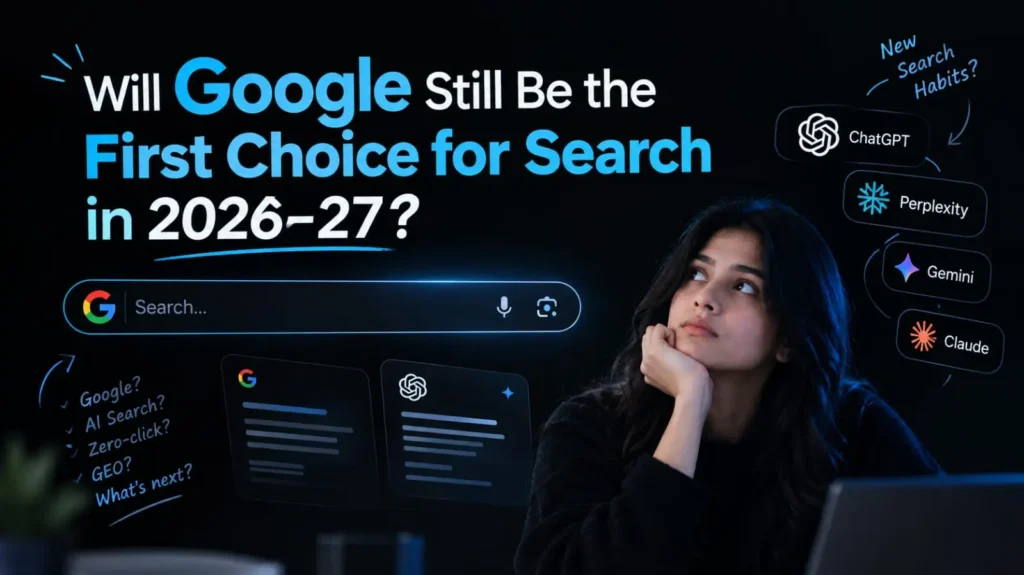

Google has ruled search for more than two decades and that grip is still strong today. According to StatCounter data from 2026 Google handles between roughly 89% to 90% of the world’s searches across desktop mobile and tablet. That number alone answers the question in a simple way. Yes Google remains the default choice for most people who want to find something online.
But the full picture is more layered than a single percentage. Google now generates over 300 billion dollars in annual ad revenue and processes around 8.5 billion searches every single day. Those are staggering figures. Yet inside that dominance a quiet shift is happening. Between 58% and 62% of Google searches now end without a single click and AI Overviews already appear on more than a quarter of all queries. People are getting answers straight on the results page instead of visiting a website. That changes what “using Google” even means.
The Real Challenger Isn't Bing Anymore
For years the assumption was that Bing or DuckDuckGo would be the ones to chip away at Google’s lead. That didn’t happen at scale. The real disruption came from a completely different direction. Conversational AI tools like ChatGPT and Perplexity started answering questions the way a knowledgeable friend would rather than handing back ten blue links.
Google still accounts for roughly 80% to 89% of global query volume depending on how the data is measured but its lead is narrowing. Some research even suggests Google’s share of the combined discovery landscape including AI platforms dropped from about 89% to under 58% between late 2022 and late 2025. The total pool of searches has grown but Google’s slice of that bigger pie has gotten smaller.
AI search engines now handle close to 19% of all search queries worldwide a sharp jump from around 11% just a year earlier. ChatGPT still leads that segment by a wide margin but Google itself is not standing still.
Google Is Fighting Back With Its Own AI
This is the part many people miss. Google isn’t just losing ground to AI search. It is becoming one of the biggest AI search players itself through Gemini and AI Mode. Google Gemini’s share of the AI chatbot market surged from under 6% to over 21% in just twelve months according to Similarweb data from early 2026. That is close to a fourfold jump in a single year.
Alphabet reported 19% year over year growth in Search revenue during the first quarter of 2026 and said users were coming back to Search more often through AI Mode and AI Overviews. So while people talk about Google losing the AI race the company’s own earnings tell a story of Google absorbing that trend rather than getting crushed by it.
What This Means Heading Into 2027
For most everyday searches like checking the weather looking up a business address or comparing product prices Google will almost certainly remain the first stop through 2026 and into 2027. Habit alone carries enormous weight. Billions of people already have Google set as their default browser search engine and phone assistant. Switching that habit takes years not months.
Where things get genuinely uncertain is research heavy and complex informational searches. When someone wants a detailed explanation a comparison of options or a summary of a topic they increasingly open ChatGPT or Perplexity instead of typing into Google and scrolling through ten links. Organic click through rate at the very first Google result has already dropped by as much as 61% on queries where an AI Overview shows up. Content creators and website owners are feeling that shift directly in their traffic numbers.
So the honest answer is that Google will likely stay the default habit for search in 2026 and 2027 but it will no longer be the only tool people reach for. The question is shifting from “which search engine do I open” to “which tool answers this specific type of question best.” For quick facts and local searches Google still wins easily. For deep research explanations and conversational back and forth AI platforms are pulling ahead in usage even if their total numbers are still far smaller than Google’s.
The Bigger Takeaway
Google isn’t disappearing anytime soon. Its scale infrastructure and ad business give it resources that smaller AI platforms simply don’t have yet. But the idea of one single search engine controlling how people find information is fading. The next two years will likely look like a split landscape where Google remains the biggest player by far while AI powered tools carve out a growing and meaningful share particularly among younger users and people doing detailed research.
If your content strategy or business depends on search visibility the smart move for 2026 and 2027 is not choosing between optimizing for Google or optimizing for AI search. It is doing both at the same time because your audience is already doing both.