
From Traditional Search to AI Search Engine, How People Will Find Brands?
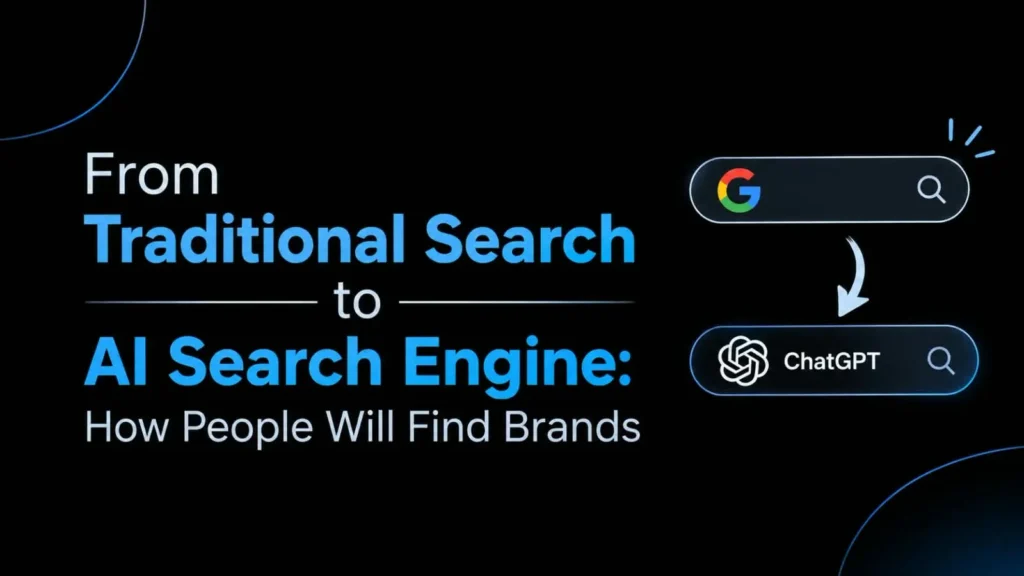
Think about the last time you needed a new laptop, a good tiffin service in Kochi, or a CA firm that handles GST filing for a small shop. Chances are you did not open ten blue links and compare them one by one. You may have typed a longer question into a chat tool, read a short answer, and then asked a follow-up. That small change in behaviour is what this article is about. The rise of AI search engines is changing how people discover brands, and it is changing the way businesses should think about visibility.
How Traditional Search Behaviour Is Changing?
For more than two decades, the typical online journey looked the same. A person typed a few keywords into Google, scanned the results page, clicked two or three links, and made a decision. Brands fought hard for the top positions because that is where attention went.
Now the journey is getting shorter and more conversational. A user in Bengaluru might ask, “Which accounting software works well for a small textile business with GST billing?” Instead of searching for “accounting software India,” the question is longer, more specific and closer to how people talk. Many users also ask follow-up questions, such as “Is it cheaper than Tally?” or “Does it work offline?” The search has become a dialogue.
This does not mean Google search has disappeared. Millions of people still use it every day, and it remains a powerful tool. But more people are now starting their research on platforms like ChatGPT, Google Gemini and Perplexity, especially for complex or comparison-based questions. Usage patterns differ across age groups, cities and industries, so no one can say with certainty how far this shift will go. What is clear is that the habit of asking questions in full sentences is growing.
What Are AI Search Engines?
AI search engines are tools that use large language models to understand a question and produce a direct, summarised answer. Some of them, such as Perplexity, show the sources they used along with the answer. Others, like ChatGPT and Google Gemini, combine their trained knowledge with live web results and present a response in a conversational format.
The key difference is that the user receives an answer first and a list of links second, if at all. The platform decides which brands, websites and facts to mention. That selection process is where brand discovery now happens, and it is less predictable than a ranking list.
How AI Search Affects Brand Visibility?
Visibility used to mean ranking. If your website sat on the first page for a keyword, you got traffic. In AI search, visibility means being mentioned, recommended or cited in the answer itself. A brand can be the one the AI suggests to a user who never visits a search results page.
This creates both opportunities and risks. A small Kerala-based spice exporter with clear product pages, honest reviews and good mentions on trusted industry sites may appear in answers to questions about organic cardamom suppliers, even if it does not dominate the traditional rankings. On the other hand, a large brand with a weak online footprint may be missing from these answers altogether. Brand discovery is becoming less about who spends the most on ads and more about who is clearly understood online.
For Indian businesses, this matters especially in regional and niche markets. Many local services, such as coaching centres in Coimbatore or interior designers in Pune, have strong offline reputations but thin digital footprints. Being present in trusted directories, news coverage, customer reviews and well-written content helps AI systems understand what these businesses do.
Differences Between Traditional SEO and AI Search
Traditional search engine optimisation focuses heavily on keywords, backlinks, page speed, technical health and on-page structure. These factors still matter. A clean website with fast loading pages and relevant content remains the foundation.
AI search adds some new considerations. The content must answer questions clearly and completely, often within the first few lines of a section. Brand mentions across credible third-party sites carry more weight than many people expect. Structured information, such as well-written FAQs, product specifications and author details, helps machines interpret a page accurately. Reviews, forum discussions and expert commentary also shape how a brand is described.
In simple terms, traditional SEO asks, “Can search engines find and rank my page?” AI search asks, “Does the web clearly explain who this brand is and why it is a good answer?” Both questions are related, but the second one needs more attention to credibility and context.
Practical Ways Businesses Can Prepare
Businesses do not need to chase every new tool. A sensible approach starts with the basics and builds from there.
First, make your core facts easy to find. Your website should clearly state what you sell, who you serve, where you operate, your pricing structure where possible, and your contact details. An “About” page with real names, experience and credentials helps both people and machines trust your brand.
Second, write content that answers real questions. Instead of publishing vague articles, create guides that address specific problems your customers face. A Hyderabad-based solar installer, for example, could explain subsidy eligibility, payback periods and maintenance costs in plain language.
Third, build your presence beyond your own website. Get listed in relevant directories, contribute guest articles to respected industry publications, encourage genuine customer reviews on Google Business Profile and other platforms, and participate in community discussions where your expertise is useful.
Fourth, keep your technical SEO strong. Make sure pages load quickly on mobile networks, which are still slower in many parts of India. Use clear headings, descriptive alt text on images and proper schema markup where it fits.
Finally, track where your brand appears. Ask AI tools common questions your customers would ask, note whether your business is mentioned, and check what information they present. This is a simple audit that can reveal gaps you did not know existed.
Future of Digital Marketing
It is difficult to predict exactly how search will look in five years. Some experts expect AI answers to become more accurate and more personalised, while others point to concerns about accuracy, bias and publisher traffic. These discussions are still developing, and businesses should avoid treating any single forecast as certain.
What seems likely is that digital marketing will become more integrated. Content, public relations, reviews, customer experience and technical SEO will work together rather than in separate silos. Marketing teams in India, from small agencies in Jaipur to large enterprises in Mumbai, will probably need to measure brand presence in new ways, not just clicks and rankings.
The businesses that adapt well will likely be those that focus on genuine expertise and clear communication. Tactics that game the system tend to fail eventually, whether the system is a search engine or an AI model.
Conclusion
The move from traditional search to AI search engines is not a sudden revolution, but it is a real shift in how people find and judge brands. Users now ask fuller questions, expect direct answers and rely on trusted sources to guide their choices. For businesses, the goal is to become a brand that AI tools can describe accurately and confidently. Strong content, credible mentions, clear information and solid technical foundations remain the best way to build that presence. Understanding AI search engines today will help your brand stay visible tomorrow.