
harshidashraf.com

Uncategorized

How small businesses can use Ai to grow their brands
Uncategorized

How Small Businesses Can Use AI to Grow Their Brands

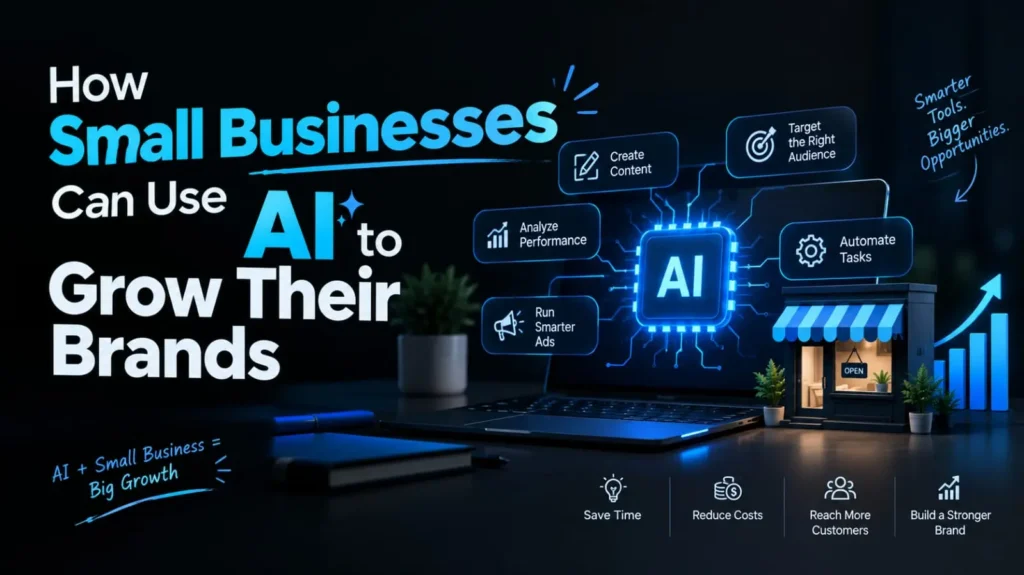
How Small Businesses Can Use AI to Grow Their Brands A few years ago artificial intelligence sounded like something only big companies with large budgets and technical teams could afford. That is no longer true. Small businesses are now adopting AI faster than large corporations and using it to compete in ways that simply were not possible before. Some surveys show adoption among small businesses climbing from around 48% in mid 2024 to over 75% by early 2026 which makes this one of the fastest technology shifts ever recorded among small companies. If you run a small business and haven’t started using AI yet you are quickly becoming the exception rather than the norm. The good news is you don’t need a technical background or a massive budget to benefit. Many of the most useful AI tools now run on affordable monthly subscriptions and are built specifically for non technical users. Here is how small businesses are actually using AI to grow their brands right now. Content Creation Without a Full Marketing Team One of the biggest reasons small businesses struggle to grow their brand is simply not having enough hands on deck to create content consistently. AI writing and design tools have changed that equation completely. Among small businesses already using AI a large majority rely on it for writing assistance and content generation covering blog posts social captions product descriptions and email campaigns. Image and visual content generation tools are also becoming common allowing a solo business owner to produce professional looking graphics without hiring a designer. This does not mean removing the human voice entirely. The businesses seeing the best results treat AI as a first draft partner. They let it handle the heavy lifting of generating ideas and rough copy then edit everything to match their own brand personality and tone. Smarter Customer Service Without Extra Staff Customer service is one of the top use cases small businesses turn to AI for and it makes sense. Chatbots and AI powered support tools can answer common questions handle booking requests and resolve simple issues instantly at any hour of the day. This matters enormously for small teams who cannot staff a support desk around the clock. Businesses that pair AI tools with a real human for more complex issues tend to see the strongest results rather than relying on AI alone for everything. For a small brand this kind of responsiveness builds trust quickly. Customers notice when their questions get answered fast and that reputation spreads through reviews and word of mouth. Personalized Marketing on a Tiny Budget Big brands have used data driven personalized marketing for years but the tools required were often too expensive or complicated for small businesses to access. That barrier has largely disappeared. AI marketing platforms can now segment audiences suggest the best times to post generate targeted ad copy and even predict which products a specific customer is likely to want next. Marketing and customer engagement now sit at the very top of the list of reasons small businesses adopt AI tools in the first place. Business owners report saving significant time on content creation and data analysis which frees them up to focus on strategy and relationships instead of repetitive manual work. Standing Out in AI Powered Search There is a newer challenge small businesses need to pay attention to as well. Customers are increasingly starting their research inside AI chat tools like ChatGPT Gemini and Perplexity rather than typing directly into a traditional search engine. Yet many brands still have no plan for showing up inside these AI driven answers. Small businesses that start optimizing how their brand appears in AI generated responses now are positioning themselves ahead of competitors who are still only thinking about traditional search rankings. This means writing clear well structured content about your products and services publishing accurate information across your website and listings and making sure your brand story is easy for AI systems to understand and summarize correctly. Keep the Human Touch at the Center With all this automation available it can be tempting to let AI run the entire brand voice. That would be a mistake. Consumers increasingly want transparency about when they are interacting with AI generated content and businesses that stay honest about this build stronger long term trust. The small businesses winning with AI right now are not the ones replacing their personality with automation. They are the ones using AI to handle repetitive tasks faster so they can spend more time on the parts of the business that actually need a human touch like building relationships answering unique customer needs and shaping a brand story that feels authentic. Getting Started Without Feeling Overwhelmed You do not need to adopt every AI tool at once. Start with one area that causes the most friction in your day whether that is writing content answering customer questions or planning your social media calendar. Test a tool built for small businesses see how much time it actually saves you and then expand from there. AI is no longer a future trend for small businesses to watch from a distance. It has already become one of the fastest and most affordable ways for a small brand to compete with much larger companies. The business owners who start experimenting now rather than waiting will be the ones setting the pace for their industry over the next few years. Leave a Reply Cancel Reply Logged in as harshidashraf.official@gmail.com. Edit your profile. Log out? Required fields are marked * Message*
The rise of Ai influencers
Uncategorized

The Rise of AI Influencers: The Next Big Marketing Trend?

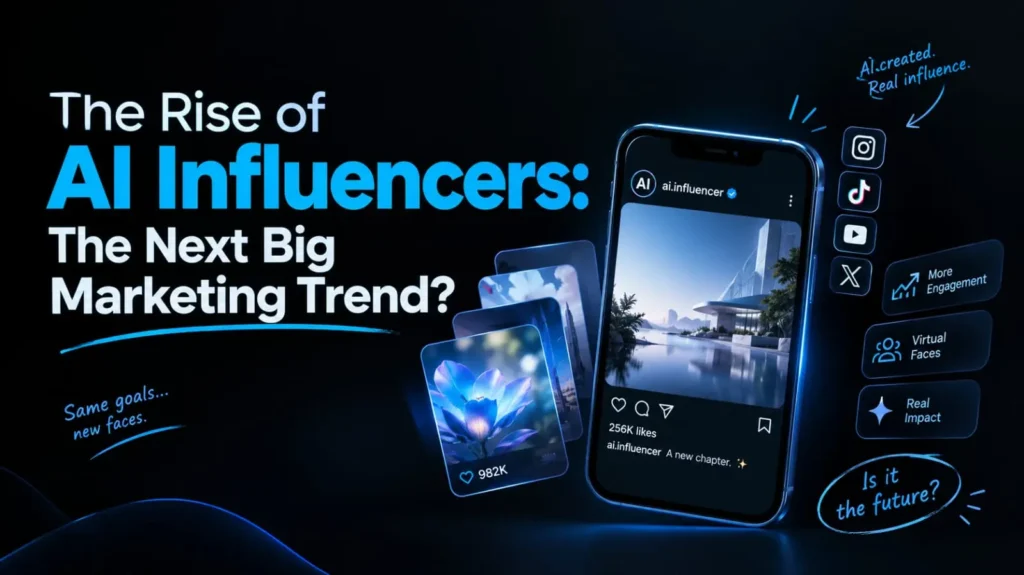
The Rise of AI Influencers: The Next Big Marketing Trend? Scroll through Instagram or TikTok today and there is a good chance you have already followed an AI influencer without even realizing it. These are computer generated personas with faces bodies and personalities built entirely through code and design software yet they post outfit pictures share opinions and promote products just like a real person would. What started as a quirky experiment a few years ago has now turned into a serious marketing category that brands are pouring real money into. The numbers make the shift hard to ignore. The global virtual influencer market has grown into a multi billion dollar industry in 2026 with some research placing its value near 11.7 billion dollars and other reports pushing that figure even higher depending on how the data is measured. Growth forecasts suggest this market could expand at a compound annual rate above 40% over the next several years pushing total value well past 100 billion dollars by the early 2030s. That kind of growth curve is rare even in the fast moving world of digital marketing. Why Brands Are Betting on Virtual Personalities The appeal for companies comes down to control cost and consistency. A human influencer can have a bad day post something controversial or simply lose interest in a brand partnership. An AI influencer never does any of that. It stays perfectly on message twenty four hours a day and can produce content in multiple languages without needing a single extra shoot or flight ticket. Brand adoption reflects this appeal clearly. Surveys show that adoption of virtual influencers among companies jumped from around 60% to roughly 73% within a single year with beauty and personal care brands leading the charge at close to 89% adoption. Fashion and gaming brands are close behind. A majority of marketers now believe virtual influencers will play a significant role in shaping the future of marketing and a large share of brands report that AI personas actually deliver stronger returns compared to equivalent campaigns run with human creators. Engagement numbers back this up too. Campaigns run through virtual influencers have shown engagement rates roughly three times higher than those from typical human creators largely because audiences are still drawn to the novelty of interacting with a digital persona that feels almost real. The Audience Is Already Buying In It would be easy to assume this trend only works because brands are pushing it but consumer behavior tells a different story. More than half of consumers in the United States now say they follow at least one virtual influencer and a meaningful portion of Gen Z shoppers admit to purchasing products specifically because an AI persona recommended them. Younger audiences especially seem far more comfortable blending real and synthetic media than older generations ever were. Some of the most successful virtual influencers now earn millions of dollars annually through brand partnerships rivaling or even outperforming the earnings of many human creators. Names like Lil Miquela and Lu do Magalu have built partnerships with major global brands proving that this is not just a gimmick but a genuine commercial channel with staying power. The Risks Nobody Should Ignore Of course a trend growing this fast comes with real concerns. Transparency is one of the biggest issues since not every viewer realizes they are engaging with a computer generated character rather than an actual human being. Regulators in several regions have already begun pushing for clearer disclosure rules around AI generated advertising content. Fraud is another growing worry. Losses tied to influencer marketing fraud have reached billions of dollars with a significant portion now linked directly to AI generated fake engagement and synthetic accounts. As more brands rush into this space without proper verification tools the risk of wasted budget and damaged trust grows right along with the opportunity. There is also the question of authenticity. Part of what made influencer marketing work in the first place was the feeling of a real relatable person sharing genuine opinions. AI influencers challenge that idea directly and it remains to be seen whether audiences will stay engaged once the novelty wears off or whether fatigue will eventually set in the same way it did with early banner ads and pop ups. So Is This the Next Big Marketing Trend Based on where the data stands heading into 2027 the answer leans strongly toward yes but with an important nuance. AI influencers are unlikely to fully replace human creators anytime soon. Instead they are becoming a powerful addition to the marketing toolkit sitting alongside human influencers rather than eliminating them entirely. Brands that treat AI influencers as one part of a broader creator strategy rather than a complete replacement for human connection are the ones most likely to see lasting success. The companies already leaning into this space are not waiting to see if the trend fades. They are testing budgets building custom AI personas and learning the mechanics early while competitors still hesitate. For marketers watching from the sidelines the message from 2026 data is fairly clear. AI influencers have moved past the experimental phase and into the mainstream of digital marketing strategy. Whether that growth continues at its current pace will likely depend on how well brands handle transparency trust and the fine line between innovation and manipulation over the next couple of years. Leave a Reply Cancel Reply Logged in as harshidashraf.official@gmail.com. Edit your profile. Log out? Required fields are marked * Message*

will google still be the first choice for search
Uncategorized

Will Google Still Be the First Choice for Search in 2026-27?

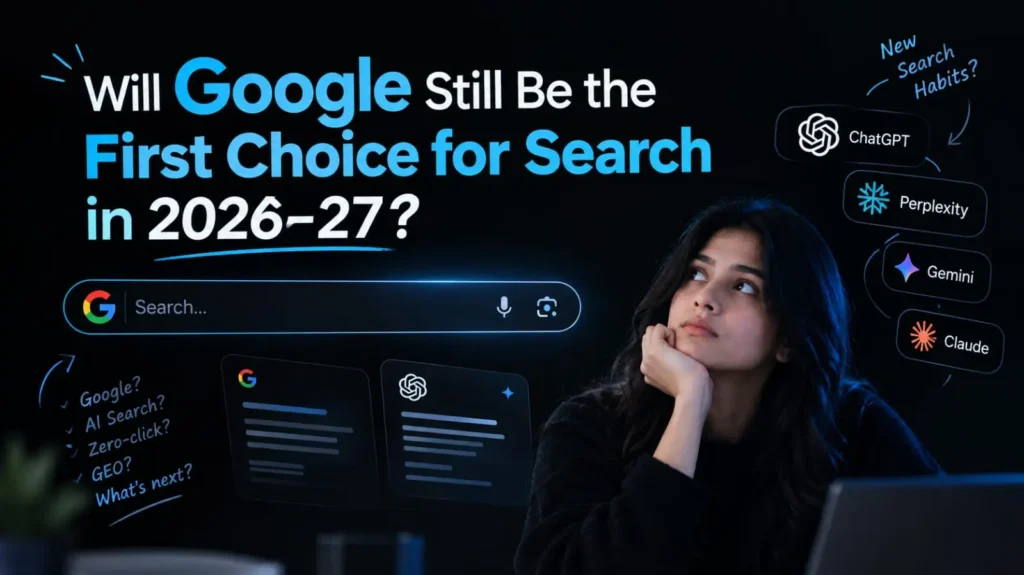
Will Google Still Be the First Choice for Search in 2026-27? Google has ruled search for more than two decades and that grip is still strong today. According to StatCounter data from 2026 Google handles between roughly 89% to 90% of the world’s searches across desktop mobile and tablet. That number alone answers the question in a simple way. Yes Google remains the default choice for most people who want to find something online. But the full picture is more layered than a single percentage. Google now generates over 300 billion dollars in annual ad revenue and processes around 8.5 billion searches every single day. Those are staggering figures. Yet inside that dominance a quiet shift is happening. Between 58% and 62% of Google searches now end without a single click and AI Overviews already appear on more than a quarter of all queries. People are getting answers straight on the results page instead of visiting a website. That changes what “using Google” even means. The Real Challenger Isn’t Bing Anymore For years the assumption was that Bing or DuckDuckGo would be the ones to chip away at Google’s lead. That didn’t happen at scale. The real disruption came from a completely different direction. Conversational AI tools like ChatGPT and Perplexity started answering questions the way a knowledgeable friend would rather than handing back ten blue links. Google still accounts for roughly 80% to 89% of global query volume depending on how the data is measured but its lead is narrowing. Some research even suggests Google’s share of the combined discovery landscape including AI platforms dropped from about 89% to under 58% between late 2022 and late 2025. The total pool of searches has grown but Google’s slice of that bigger pie has gotten smaller. AI search engines now handle close to 19% of all search queries worldwide a sharp jump from around 11% just a year earlier. ChatGPT still leads that segment by a wide margin but Google itself is not standing still. Google Is Fighting Back With Its Own AI This is the part many people miss. Google isn’t just losing ground to AI search. It is becoming one of the biggest AI search players itself through Gemini and AI Mode. Google Gemini’s share of the AI chatbot market surged from under 6% to over 21% in just twelve months according to Similarweb data from early 2026. That is close to a fourfold jump in a single year. Alphabet reported 19% year over year growth in Search revenue during the first quarter of 2026 and said users were coming back to Search more often through AI Mode and AI Overviews. So while people talk about Google losing the AI race the company’s own earnings tell a story of Google absorbing that trend rather than getting crushed by it. What This Means Heading Into 2027 For most everyday searches like checking the weather looking up a business address or comparing product prices Google will almost certainly remain the first stop through 2026 and into 2027. Habit alone carries enormous weight. Billions of people already have Google set as their default browser search engine and phone assistant. Switching that habit takes years not months. Where things get genuinely uncertain is research heavy and complex informational searches. When someone wants a detailed explanation a comparison of options or a summary of a topic they increasingly open ChatGPT or Perplexity instead of typing into Google and scrolling through ten links. Organic click through rate at the very first Google result has already dropped by as much as 61% on queries where an AI Overview shows up. Content creators and website owners are feeling that shift directly in their traffic numbers. So the honest answer is that Google will likely stay the default habit for search in 2026 and 2027 but it will no longer be the only tool people reach for. The question is shifting from “which search engine do I open” to “which tool answers this specific type of question best.” For quick facts and local searches Google still wins easily. For deep research explanations and conversational back and forth AI platforms are pulling ahead in usage even if their total numbers are still far smaller than Google’s. The Bigger Takeaway Google isn’t disappearing anytime soon. Its scale infrastructure and ad business give it resources that smaller AI platforms simply don’t have yet. But the idea of one single search engine controlling how people find information is fading. The next two years will likely look like a split landscape where Google remains the biggest player by far while AI powered tools carve out a growing and meaningful share particularly among younger users and people doing detailed research. If your content strategy or business depends on search visibility the smart move for 2026 and 2027 is not choosing between optimizing for Google or optimizing for AI search. It is doing both at the same time because your audience is already doing both. Leave a Reply Cancel Reply Logged in as harshidashraf.official@gmail.com. Edit your profile. Log out? Required fields are marked * Message*

Scroll to Top